
What This Habit Helps You Do
This habit helps you make balanced meals easier by building a personal list of foods you actually enjoy eating.
Instead of staring into the fridge thinking about what you should eat, you create a short, realistic list of vegetables, fruit, proteins and whole grains that work for you. This makes everyday food choices quicker, calmer and far more sustainable.
Why It Works
Balanced eating only works long term if the food is enjoyable.
Many people struggle because they try to eat foods they think are “healthy”, even if they dislike them. That creates resistance, boredom and eventually burnout.
By choosing foods you genuinely like:
- Meals become easier to repeat
- Planning and shopping feel simpler
- You are more likely to follow through
- Balanced meals stop feeling like a chore
This habit removes “shoulds” and replaces them with choices.
What to do
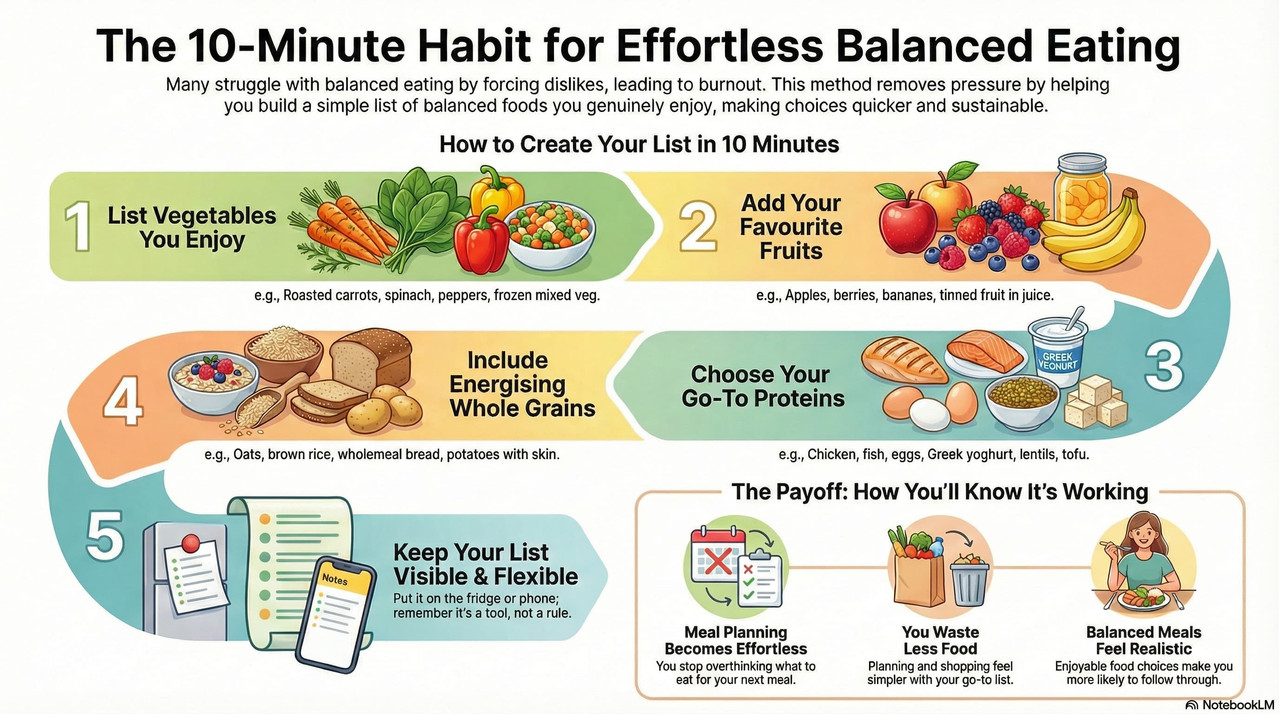
Set aside 10 minutes. This is about building a living list you can update over time.
Start with vegetables
Write down vegetables you like or can tolerate well. Real life examples:
- Roasted carrots
- Peppers
- Spinach
- Cucumber
- Broccoli
- Mixed frozen veg.
Ignore vegetables you hate. You are not required to eat them.
Add fruit
List fruits you enjoy eating regularly. Real life examples:
- Apples
- Bananas
- Berries
- Oranges
- Grapes
- Tinned fruit in juice.
Again, preference matters more than perfection.
Choose lean or healthy proteins
List protein foods you enjoy and feel comfortable cooking or preparing. Real life examples:
- Chicken
- Fish
- Eggs
- Greek yoghurt
- Cottage cheese
- Lentils
- Beans
- Tofu.
Include whole grains
Write down carbohydrate foods that give you longer-lasting energy. Real life examples:
- Oats
- Brown rice
- Wholemeal bread
- Potatoes with skin
- Quinoa
- Wholemeal pasta.
Keep the list visible
Put your list somewhere easy to see:
- On the fridge
- In your phone
- Inside your meal planner
Update it as tastes change or you discover new foods.
Common Mistakes to Avoid
- Adding foods you dislike because you “should” eat them
- Forgetting to update it
- Treating it as fixed rather than flexible
This list is a tool, not a rule.
What You’ll Need
- A pen and paper or notes app
- Honesty about what you enjoy
- Willingness to revise over time
How to Know It’s Working
- Meal planning feels easier.
- You waste less food.
- Balanced meals feel more realistic.
- You stop overthinking what to eat.
Your Next Check-In
Bring your food lists to our next session. We’ll use them to:
- Build balanced meals
- Simplify meal planning
- Spot gaps without judgement
This habit gives you options. Options make everything easier.