
What This Habit Helps You Do
This habit helps you make healthier choices without having to rely on constant willpower.
By changing what is around you in your living room, kitchen, workspace or daily routines, you make good choices easier and less helpful choices harder. The goal is not self-control. The goal is better setup.
Why It Works
Your environment shapes your behaviour far more than motivation does.
When food, screens or distractions are easy to reach, you will use them more. When healthy options are visible and convenient, you are far more likely to choose them.
Changing your environment:
- Reduces decision fatigue
- Lowers reliance on willpower
- Makes habits feel more automatic
- Helps you stay consistent even on hard days
You are not changing yourself. You are changing the conditions around you.
What to do
Focus on your most common spaces. Small changes are enough.
1. Identify your trigger zones
Think about where less helpful habits usually happen.
Real life examples:
- The sofa at night
- The kitchen counter
- Your desk at work
- The car.
2. Remove or hide trigger foods
You do not need to ban anything. You just need to reduce constant exposure.
Real life examples:
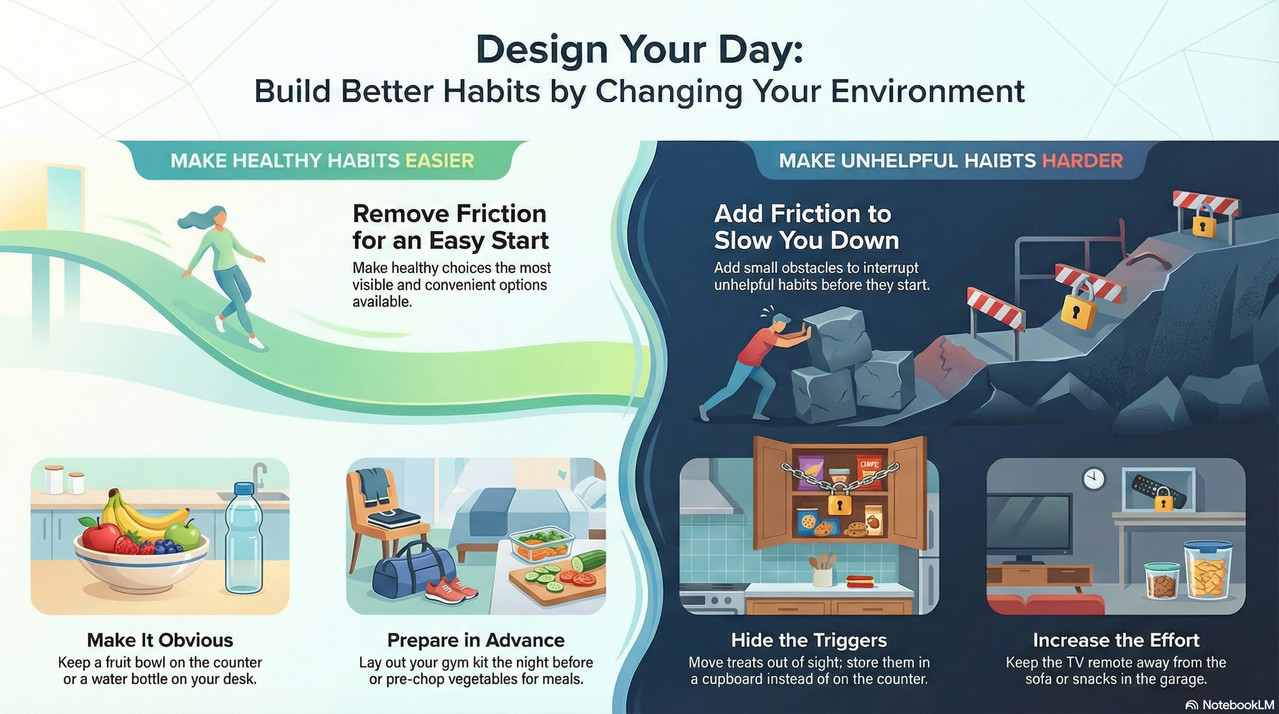
- Move treats out of sight
- Store them in a cupboard instead of on the counter
- Stop buying multipacks for everyday access
Out of sight often means out of mind.
3. Make unhelpful choices harder
Add small obstacles that slow you down.
Real life examples:
- Keep snacks in the garage instead of the kitchen
- Having to get dressed before going out for fast food
- Store the TV remote away from the sofa
If you have to pause, you are more likely to choose differently.
4. Make healthy choices visible and easy
Now do the opposite for habits you want more of.
Real life examples:
- Fruit on the counter
- Chopped veg at eye level in the fridge
- Gym kit by the door
- Water bottle on your desk
- Pre-chopping veg
- Batch cooking meals
- Keeping simple snacks ready
- Laying out clothes the night before
Less effort means more follow-through.
Common Mistakes to Avoid
• Trying to change everything at once
• Expecting motivation to do all the work
• Making changes that are too extreme
• Forgetting to review and adjust
Your environment should support you, not feel like punishment.
What You’ll Need
• A few minutes to walk through your spaces
• Willingness to move things around
• Curiosity about what actually influences your choices
No major overhauls required.
How to Know It’s Working
- Healthy choices feel easier and more automatic.
- You pause more often before less helpful habits.
- You rely less on willpower.
- Consistency improves without extra effort.
Your Next Check-In
Before our next session, notice:
- One environment you changed
- What became easier
- What still feels tempting
We will build on what worked and adjust what didn’t.