
What This Habit Helps You Do
This habit helps you pause and check in with your body before, during and after eating. Instead of eating purely on autopilot, emotion or habit, you learn to ask:
“How hungry or full am I actually right now?”
This creates awareness around physical hunger versus other reasons we might eat, like boredom, stress, tiredness or routine.
Why It Works
Many people become disconnected from their hunger and fullness signals over time. Eating can easily become automatic:
- Eating because food is there
- Eating because it is “time”
- Eating to relax, comfort or distract
- Continuing to eat past fullness without noticing
Using a simple hunger scale creates a pause between the urge to eat and the action itself. That pause helps you respond more intentionally instead of automatically.
What to do
Use a simple scale from 1 to 10 to rate how physically hungry or full you feel.
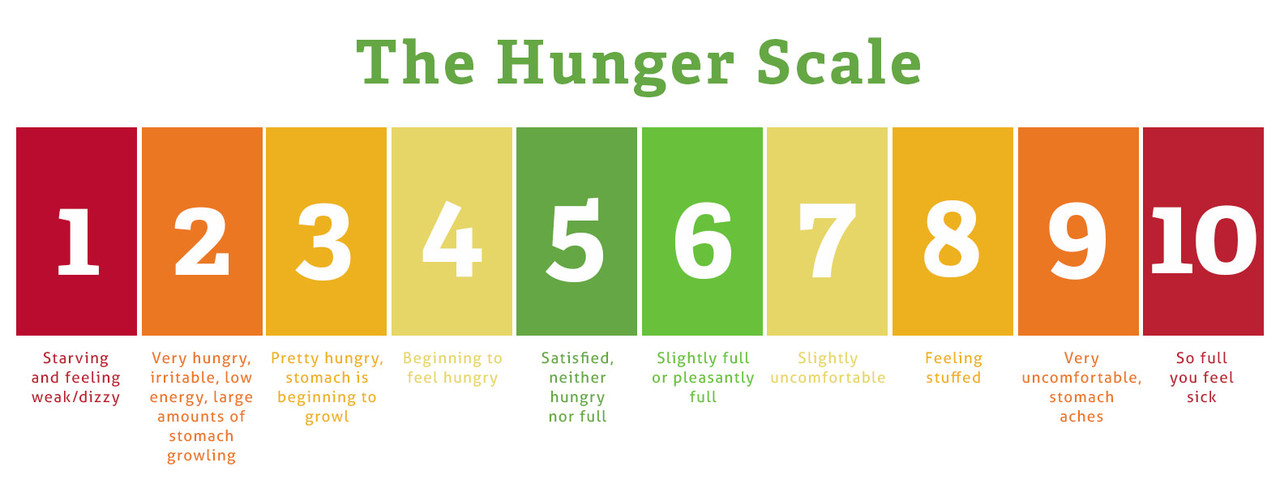
Before, during and after eating, pause and ask:
“Where am I on the scale right now?”
The goal is not to hit a perfect number.
The goal is awareness.
Things to Notice
If you are not physically hungry, ask:
- Am I bored?
- Am I stressed?
- Am I tired?
- Am I eating because it is there?
- Am I eating out of habit?
Sometimes the answer will still be:
“I want the food anyway.”
That is okay. The point is to notice the difference between physical hunger and other triggers.
Use the Scale to Learn
Over time, you may notice patterns like:
- Waiting until you are starving before eating, then overindulging because you have lost all willpower
- Eating past comfort because you are distracted, then feeling unhappy and guilty
- Snacking when stressed or bored, rather than hungry
This information helps you make calmer, more informed choices in the future.
Common Mistakes to Avoid
Treating the scale like a rule
This is a guide for awareness, not a scoring system.
Expecting perfect accuracy
Learning your hunger signals takes practice.
Judging yourself for the answer
There is no “correct” number to feel.
Ignoring fullness once eating starts
Checking in halfway through a meal can be just as helpful as checking beforehand.
What You’ll Need
- The hunger scale below
- A few seconds to pause before eating
- Curiosity instead of criticism
That’s enough.
How to Know It’s Working
- You pause more often before eating
- You recognise emotional or boredom eating sooner
- You feel more aware of fullness during meals
- Eating feels calmer and less automatic
Awareness comes before change.
Your Next Check-In
Before our next session, notice:
- What number you most commonly start eating at
- What situations trigger non-hunger eating
- Whether checking in changes your choices at all
You are not trying to eat “perfectly”.
You are learning how your body and habits actually work.