
What This Habit Helps You Do
This habit helps you recover when life knocks your plan slightly off course.
- Not restart.
- Not “get back on track”.
- Recover.
Because most people do not fail from one off-plan moment. They struggle because a small wobble turns into a full slide.
This habit interrupts that slide and gets you moving forward again, calmly and deliberately.
Why It Works
When plans derail, people usually do one of two things:
- Panic and overcorrect
- Give up and spiral
This habit gives you a third option. It creates a pause, settles your system, and then guides you towards a small, sensible next action.
No motivation required. No perfection expected. Just forward motion.
What to do
When you notice things going off course, use this simple three-step response.
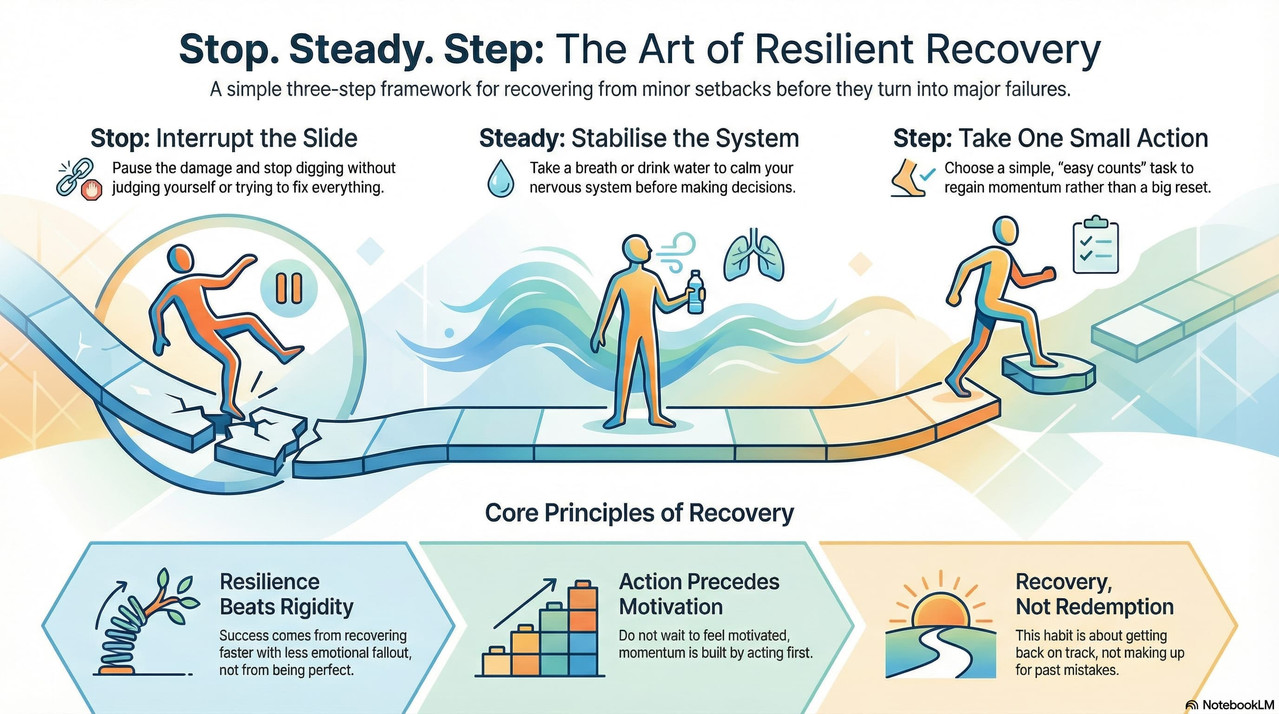
“Stop. Steady. Step.”
1. Stop
Interrupt the slide. This is the moment you stop digging. Not fixing everything. Not judging yourself. Just pause the damage.
Examples:
- Stop the eating session that has slipped into autopilot
- Stop skipping the walk because “the day’s already ruined”
- Stop replaying what you should have done differently
The rule here is simple.
“Don’t make it worse.”
Stopping is already a win.
2. Steady
Create a breather. Now you stabilise. This is about getting your head back, not forcing motivation.
Examples:
- Take a few slow breaths
- Drink some water
- Sit down, stand up, step outside, change rooms
You are not deciding anything big here. You are just helping your nervous system calm down enough to think again.
If Stop is the handbrake, Steady is letting the car settle.
3. Step
Move forward with something small. This is where momentum comes back. Not a perfect plan. Not a big reset. Just the next right step.
Examples:
- Eat a normal next meal
- Go for a five-minute walk
- Lay out your gym clothes
- Go to bed a bit earlier
Small counts. Easy counts. Done counts.
“One step forward beats standing still.”
Common Mistakes to Avoid
Trying to fix everything at once
This habit is about recovery, not redemption.
Waiting to feel motivated
You act first. Motivation follows later.
Skipping straight to “Step”
If you do not Stop and Steady first, the Step usually feels harder than it needs to be.
What You’ll Need
- Awareness that things are wobbling
- Permission to pause without judgement
- Willingness to choose a small next action
That’s it.
How to Know It’s Working
- Small slips do not turn into full derailments
- You recover faster and with less emotional fallout
- You feel calmer and more capable when plans change
- You trust yourself more to handle real life disruptions
Resilience beats rigidity every time.
Your Next Check-In
Next time life gets in the way, ask:
- What do I need to stop right now?
- What would help me steady myself?
- What is one small step I can take next?
You are not behind. You are just practising recovery.