
What This Habit Helps You Do
This habit helps you move your body with purpose.
Being active is great. Walking around, doing chores and living your life all count. Deliberate exercise is different. It’s time you intentionally set aside to move your body in a way that supports your strength, fitness and health.
This habit helps you stop relying on “being busy” and start building something on purpose.
Why It Works
Deliberate exercise sends a clear signal to your body: this matters.
When you exercise on purpose, even just two or three times per week, you build strength, resilience and confidence in a way general activity alone doesn’t always provide.
It also creates a predictable rhythm. Instead of hoping movement happens, you choose it.
What to do
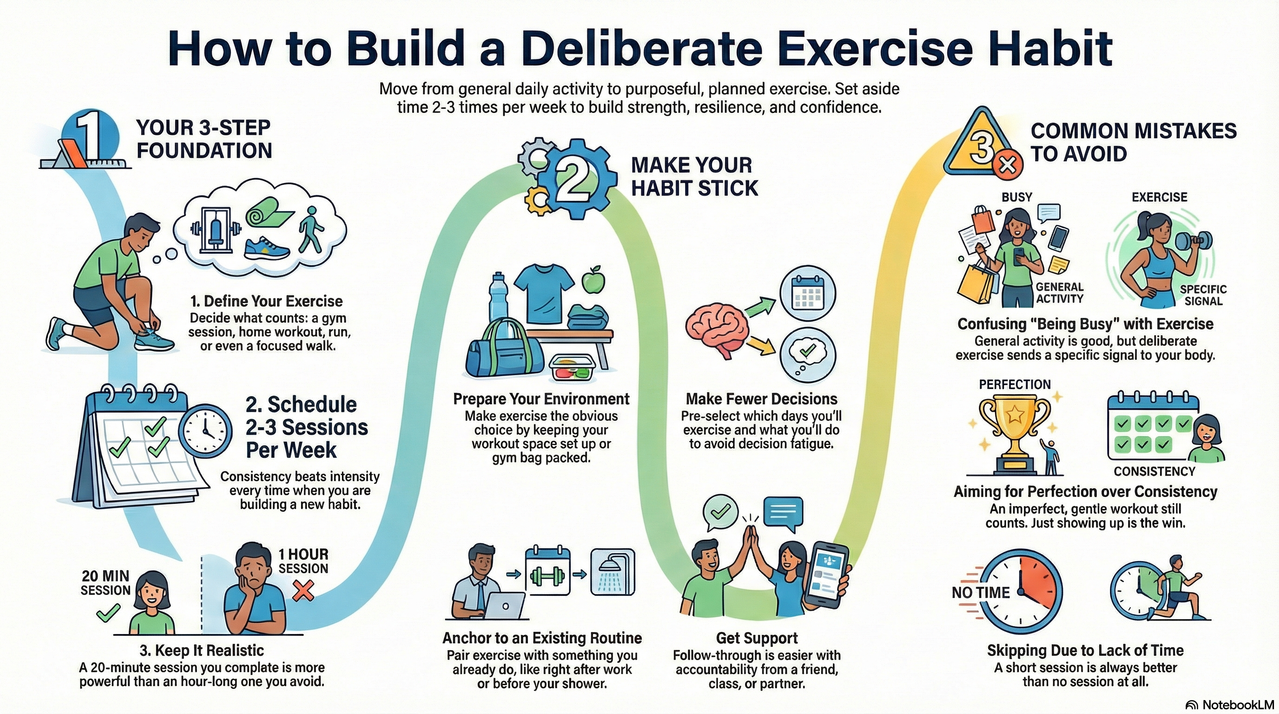
- Decide what counts as deliberate exercise for you.
This might be a gym session, a home workout, a class, a run, a swim or a focused strength routine. Walking can count if it’s intentional and planned, not just incidental. - Choose two or three sessions per week.
Harder is not better here. Consistency beats intensity every time. - Keep the sessions realistic.
Twenty minutes done regularly is more powerful than an hour you avoid. - Use the ideas below to make this habit easier to keep.
- Make it simpler or easier
Lower the barrier to starting. Example: choose one type of workout and repeat it instead of constantly changing plans. - Break it into bite sized chunks
You don’t have to do it all at once. Example: two ten-minute sessions back to back still count as a workout. - Change the timing
Put exercise where your energy is better. Example: exercise before work instead of hoping you’ll feel like it in the evening. - Change the environment
Make the choice obvious and accessible. Example: keep your workout space set up or your gym bag packed. - Make fewer decisions
Decision fatigue kills exercise habits. Example: pre-select which days are exercise days and what you’ll do on each one. - Steal a plan from someone who has done it before
You don’t need to reinvent the wheel. Example: follow a beginner programme or class rather than designing your own workouts. - Pair it with something you already do
Anchor exercise to an existing routine. Example: exercise straight after dropping the kids off or before your usual shower time. - Do it imperfectly on purpose
Not every session needs to be your best. Example: a gentle workout still counts if you showed up. - Get help, support or accountability from your support crew
Support makes follow-through easier. Example: book classes with a friend or let someone know which days you plan to exercise.
Common Mistakes to Avoid
- Assuming being busy is the same as exercising
- Aiming for perfection instead of consistency
- Skipping sessions because you don’t have enough time
- Treating exercise as punishment or a chore
What You’ll Need
- A clear idea of what counts as deliberate exercise
- Comfortable clothes and footwear
- A simple plan for the week
- Optional: a class, programme or accountability partner
How to Know It’s Working
- Exercise starts to feel like part of your week, not an interruption.
- You feel more capable and confident in your body.
- You stop negotiating with yourself every time a session comes up.
That’s the habit settling in.
Your Next Check-In
Bring a note of when you exercised and how it felt to our next session. We’ll look at what supported consistency and adjust things so this habit fits your life long-term.