
What This Habit Helps You Do
This habit helps you recognise the situations, emotions and environments that tend to pull you into habits you are trying to change.
Instead of being caught off guard, you learn to plan ahead. That way, when a trigger shows up, you already know what you are going to do next.
Why It Works
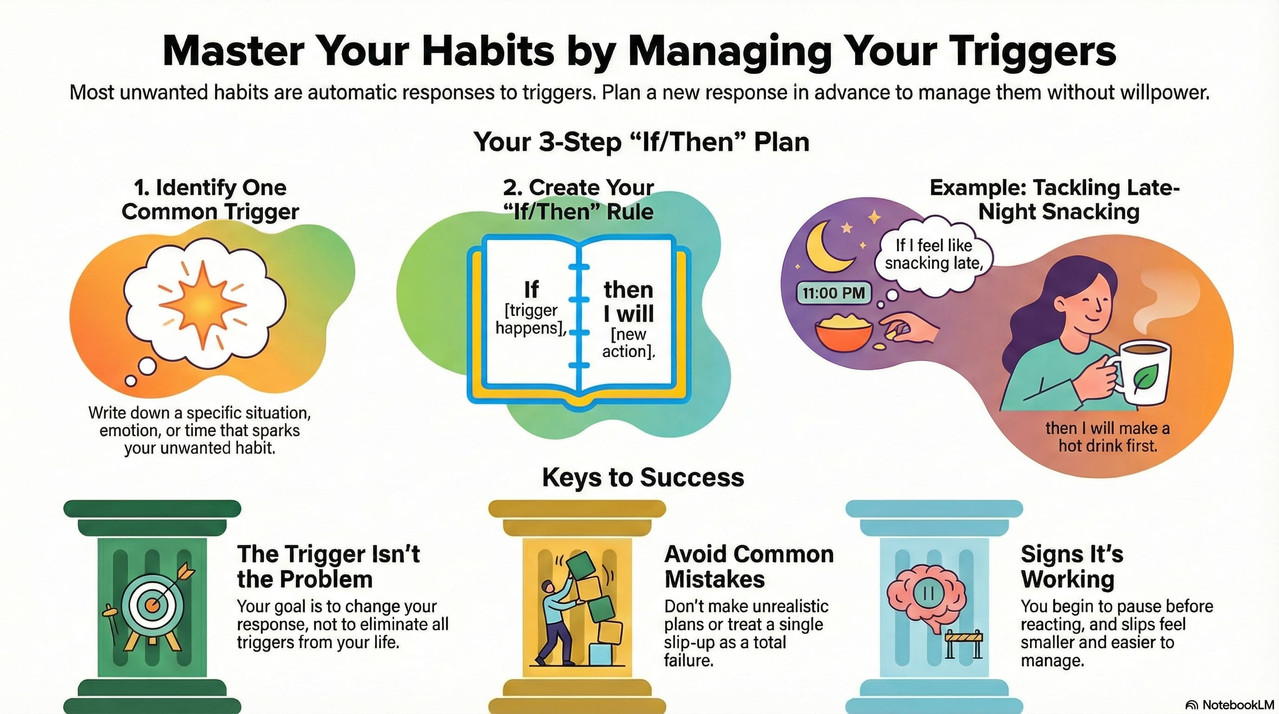
Most habits are not random. They are triggered.
Triggers might be:
- Certain foods being nearby
- Specific times of day
- Stress, tiredness or boredom
- Social situations
- Being alone or overwhelmed
When a trigger appears, your brain wants the familiar response. Planning ahead with an “if/then” plan removes the need to decide in the moment.
You are not trying to avoid life. You are preparing for it.
What to do
Keep this practical and realistic.
- Identify your common triggers
Write down situations where you often slip into habits you are trying to change.
Real life examples:- Eating snacks late at night
- Reaching for treats when stressed
- Skipping exercise after a long workday
- Overeating at social events
- Choose one trigger to work on first
Do not try to fix everything at once. Pick the one that causes the most trouble. - Create an if-then plan
Use this simple structure: If this happens, then I will do that.
Real life examples:- If I feel like snacking late at night, then I will make a hot drink first.
- If I come home exhausted, then I will do 5 minutes of gentle movement instead of nothing.
- If there are treats at work, then I will have one mindfully or skip them entirely.
- Practise the plan
You do not need to wait for the perfect moment. The more you practise, the more automatic it becomes.
Common Mistakes to Avoid
- Trying to eliminate all triggers
- Making plans that are too strict or unrealistic
- Expecting the urge to disappear
- Treating a slip as a failure
A trigger is not the problem. The response is what you are learning to change.
What You’ll Need
- Awareness of your habits
- A short list of triggers
- One or two realistic alternative actions
That is enough to start.
How to Know It’s Working
- You catch yourself sooner.
- You pause instead of reacting automatically.
- Slips feel smaller and easier to recover from.
- You feel more in control around situations that used to derail you.
Your Next Check-In
Before our next session, bring:
- One trigger you worked on
- The if–then plan you used
- What happened in real life
We will use that information to refine your plan, not to judge the outcome.