
What This Habit Helps You Do
This habit helps you stop trying to do everything on your own.
By identifying the people around you who can support, encourage or help you, and by being clear about how they can help, you make change feel more manageable and less isolating.
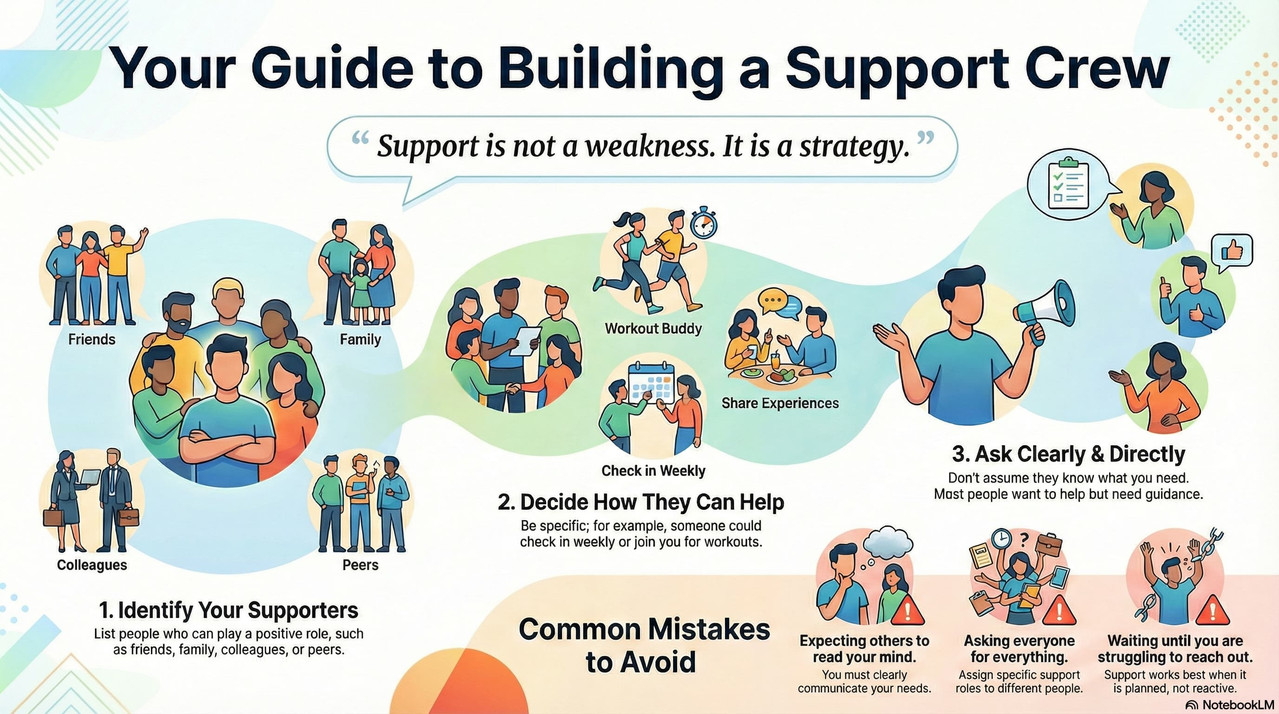
Support is not a weakness. It is a strategy.
Why It Works
Most behaviour change is not just about willpower. It is about environment and support.
When the people around you know what you are working on and how they can help, you:
- Feel less alone in the process
- Get encouragement when motivation dips
- Reduce friction and temptation
- Recover more quickly from setbacks
People cannot support you properly if they do not know what you need.
What to do
Take a few minutes to think this through. Write things down.
1. Identify potential supporters
List people who could play a positive role. These might be:
- Friends or family members
- Colleagues or peers
- Training partners or group members
- Online communities
They do not need to be perfect. They just need to be safe and supportive.
2. Decide how each person could help
Different people support in different ways.
Real life examples:
- One person checks in once a week
- Someone joins you for walks or workouts
- A friend avoids offering certain foods
- Someone simply listens without trying to fix things
Be specific. Vague support is hard to use.
3. Ask clearly and directly
This is the most important step. Do not assume people will guess what you need.
They are not a mind reader…
Real life example:
“I’m working on improving my health. It would really help if you could check in with me once a week and encourage me when I’m struggling. Would you be up for that?”
Most people want to help, but they need guidance.
Common Mistakes to Avoid
• Expecting others to read your mind
• Asking everyone for everything
• Taking it personally if someone cannot help
• Waiting until you are struggling to reach out
Support works best when it is planned, not reactive.
What You’ll Need
- A list of people you trust
- Clarity about the kind of support you want
- Willingness to ask, even if it feels uncomfortable
How to Know It’s Working
- You feel more supported and encouraged.
- You are more likely to follow through on plans.
- Setbacks feel less overwhelming.
- Change feels more shared and sustainable.
Your Next Check-In
Before our next session, note:
- Who you identified as part of your support crew
- Who you asked for support
- How that conversation went
We will use that information to refine your support system, not to judge how it went.