
What This Habit Helps You Do
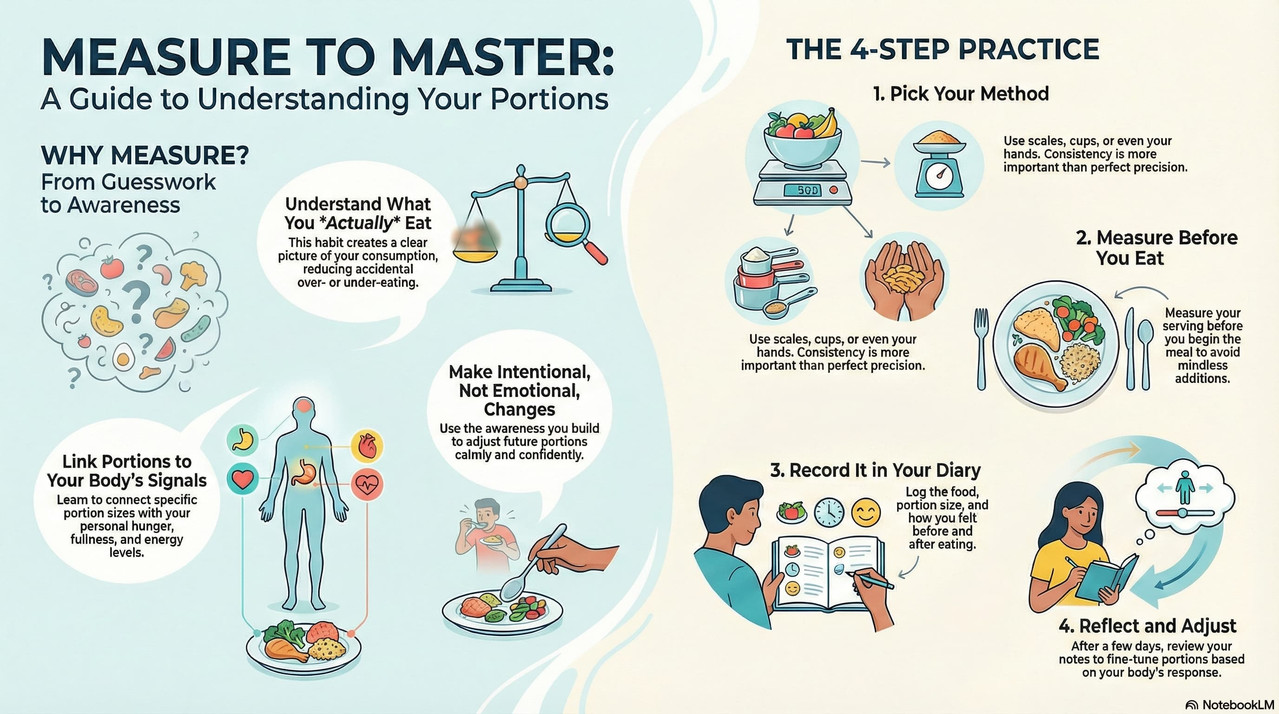
This habit helps you understand how much you are actually eating, without relying on guesswork or judgement.
By measuring portions and recording them in your food diary, you build awareness. That awareness then gives you the option to adjust portion sizes in the future, either increasing or decreasing them based on how your body responds.
This is about information, not restriction.
Why It Works
Many people do not struggle because they eat “bad” foods. They struggle because portion sizes slowly drift over time.
Measuring portions:
- Creates a clearer picture of your eating habits
- Reduces accidental overeating or under-eating
- Helps you link portion size with hunger, fullness and energy
- Makes future changes more intentional and less emotional
You cannot adjust what you are not aware of.
What to do
Choose one or two meals per day to practise this. You do not need to measure everything.
Pick a measuring method
There is no single correct way. Choose what feels realistic for you. Options include:
- Weighing food using kitchen scales
- Using cups, spoons or scoops
- Using your hands (palm, fist, thumb)
- Using familiar items (for example, a bowl or mug you use often)
Consistency matters more than precision.
Measure the portion
Measure the amount you are eating before you start. Real life example:
- Scooping cereal into a bowl and checking the amount once, instead of topping it up mindlessly.
Record it in your food diary
Write down:
- What you ate
- The portion size
- How you felt before and after eating (optional but helpful)
Keep this factual. No commentary needed.
Reflect and adjust over time
After a few days or weeks, review your notes. Ask yourself:
- Was I still hungry afterwards?
- Did I feel overly full?
- Did this portion support my energy and focus?
Use those answers to adjust portions in the future.
Common Mistakes to Avoid
- Treating measuring as a rule rather than a tool
- Expecting perfect accuracy
- Measuring everything and burning out
- Using this habit to criticise yourself
If a portion changes, that is learning, not failure.
What You’ll Need
- A food diary
- A measuring method you are comfortable with
- Curiosity about how your body responds
How to Know It’s Working
- You become more aware of portion sizes.
- You feel more confident adjusting amounts.
- You stop relying on guesswork.
- Eating feels calmer and more intentional.
Your Next Check-In
Bring a few examples from your food diary:
- Portions you measured
- How you felt afterwards
- Any changes you made or want to try next
We will use this information to fine-tune your eating, not to judge it.