
What This Habit Helps You Do
This habit helps you reduce overwhelm and burnout by deciding what actually deserves your time and energy right now.
Instead of carrying everything in your head or treating every task as urgent, you learn how to sort actions into clear categories. That alone can create a noticeable sense of relief.
Why It Works
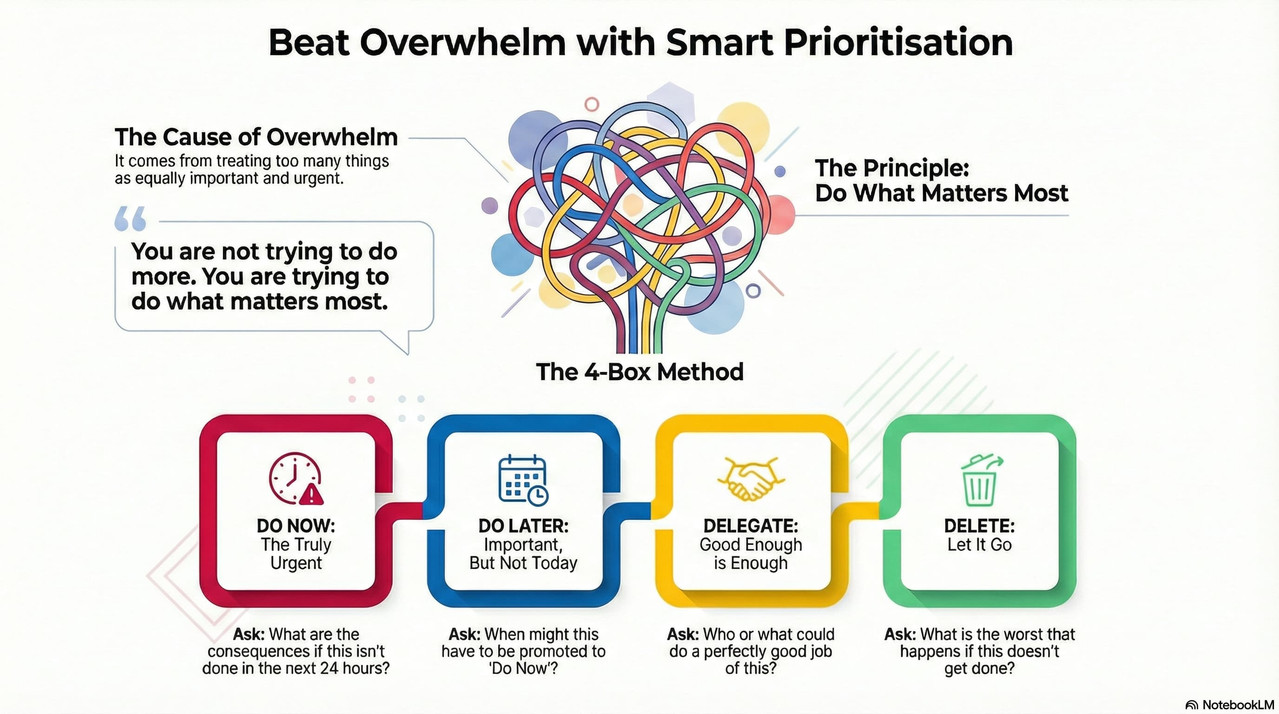
Overwhelm usually comes from treating too many things as equally important.
When everything feels urgent, your nervous system stays switched on, decision-making suffers and healthy habits are often the first things to drop. Prioritising helps you step back, assess impact and choose more intentionally.
This habit:
- Reduces mental load
- Helps you focus on what truly matters
- Protects your energy
- Makes it easier to say no, delay or ask for help
You are not trying to do more. You are trying to do what matters most.
What to do
You will use a simple four-box approach to sort tasks and actions.
Start by writing down everything that is currently on your mind. Then place each item into one of the following categories.
Do Now
Question to ask:
What are the consequences that affect money, safety, or other people’s schedules if this isn’t done in the next 24 hours?
These are time-sensitive and genuinely urgent tasks.
Real life examples:
Paying a bill that is overdue, responding to a work deadline, attending a scheduled appointment.
Do Later
Question to ask:
What time frame might this have to be promoted to “Do Now”?
These tasks matter, but not today. Giving them a future time frame stops them floating around in your head.
Real life examples:
Booking an appointment, planning meals for next week, organising paperwork.
Delegate
Question to ask:
Who or what would do a perfectly good job of this, even if it is not done my way?
Delegating does not mean lowering standards. It means recognising that “good enough” is often enough.
Real life examples:
Asking a partner to help with chores, using a delivery service, letting someone else take the lead.
Delete
Question to ask:
What is the worst thing that will happen if this doesn’t get done, and could I live with that outcome for a week?
Some tasks feel important simply because they have been hanging around for a long time.
Real life examples:
Unsubscribed emails, optional commitments, tasks based on guilt rather than value.
Common Mistakes to Avoid
• Treating everything as a “Do Now”
• Confusing urgency with importance. For example, almost every notification on your phone.
• Avoiding delegation because it feels uncomfortable
• Feeling guilty about deleting tasks
Removing something from your list is not laziness. It is a choice.
What You’ll Need
- A pen and paper or notes app
- A few uninterrupted minutes
- Willingness to be honest about impact, not pressure
How to Know It’s Working
- Your to-do list feels shorter and clearer.
- You feel calmer about what can wait.
- You have more energy for important habits.
- You stop carrying tasks around mentally.
Your Next Check-In
Before our next session, bring:
- One task you moved out of “Do Now”
- One thing you delegated or deleted
- How that decision affected your stress or energy
We will refine your approach together. This is not about productivity. It is about sustainability.