
What This Habit Helps You Do
This habit helps you make better food choices without having to rely on willpower in the moment.
By deciding what you’re going to eat ahead of time, you reduce last-minute stress, decision fatigue and the temptation to grab whatever is quickest and easiest, which is often not what your future self actually wants.
Why It Works
Most poor food choices are not about knowledge or motivation. They are about timing.
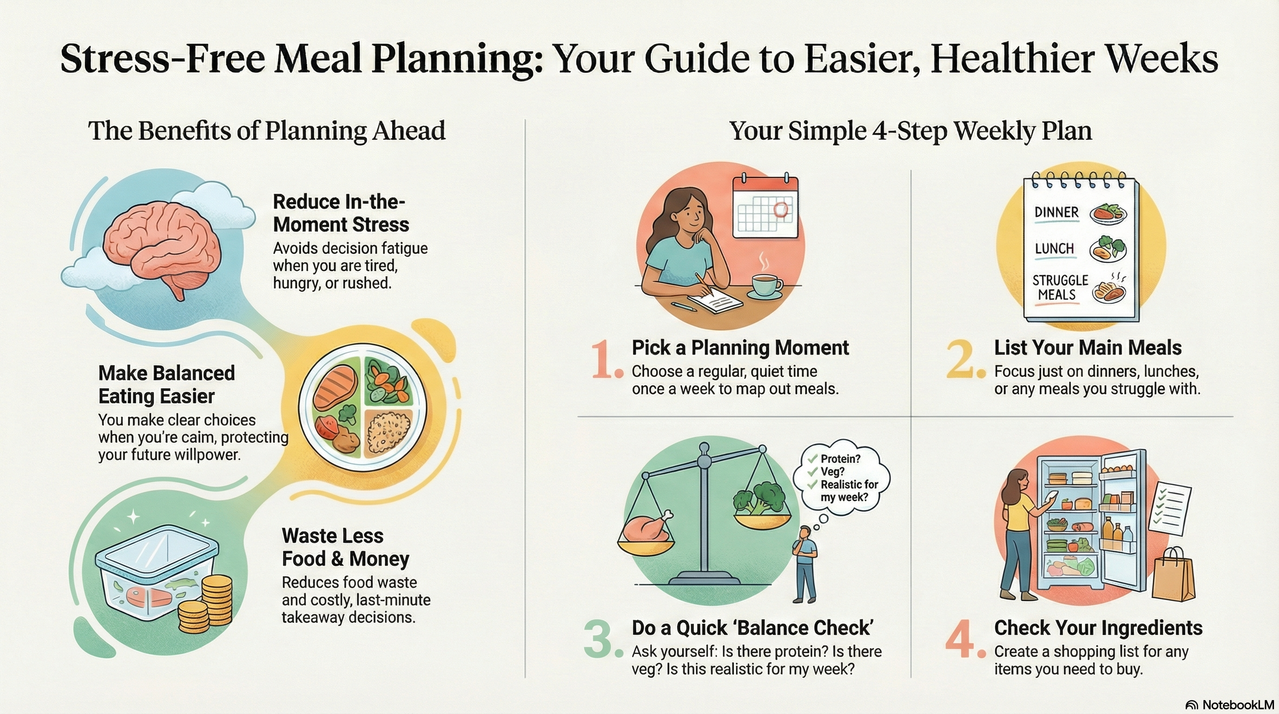
When you are tired, hungry, rushed or overwhelmed, your brain looks for the fastest solution. Planning meals in advance means those decisions are already made when your brain is calm and thinking clearly.
Meal planning:
- Protects your future willpower
- Makes balanced eating much easier
- Reduces food waste and last-minute takeaway decisions
- Helps you make sure ingredients are available when you need them
You are not trying to be rigid. You are trying to be prepared.
What to do
Keep this simple. This is not about perfect meal plans.
Choose a planning moment
Pick a regular time once per week. Many people find weekends or a quiet evening works best.
Decide on your main meals
Write down what you plan to eat for:
- Dinners
- Lunches
- Any meals you usually struggle with. (You do not need to plan every snack.)
Check balance, not perfection
Look at your meals and ask:
- Is there some veg?
- Is there a source of protein?
- Is this realistic for my schedule?
Check ingredients
Make sure you have what you need, or add missing items to your shopping list.
Leave room for flexibility
Planning does not mean locking yourself in. It means having a default option ready.
Real life example:
If Wednesday evenings are chaotic, plan a very simple meal you can cook quickly or reheat. That way you are not deciding from scratch when you are exhausted.
Common Mistakes to Avoid
- Planning too many complicated meals
- Expecting your week to go exactly as planned
- Planning meals you do not actually enjoy
- Treating the plan as a rule rather than a guide
- If the plan changes, that is normal. Adjust it, do not abandon it.
What You’ll Need
- A notebook, planner or notes app
- A basic shopping list
- A short list of go-to meals you already know how to make
- That’s it.
How to Know It’s Working
- You feel less stressed about food during the week.
- You make fewer last-minute food decisions.
- Balanced meals become easier to follow through on.
- You notice fewer “I’ll just grab something” moments.
Your Next Check-In
Before our next session, bring:
- Your planned meals for a few days/a week
- A note on which meals felt easy and which felt tricky
We will use that information to simplify and improve your next plan, not to judge it.